How to Praise the Behavior You Want to See in Your Child

Many parents say “good job” throughout the day.
While well intentioned, this kind of praise is often too general to help children learn what they actually did well.
If you’ve ever wondered how to praise a child in a way that actually helps them learn, the key is to be clear, specific, and immediate.
When they understand exactly what behavior is being noticed, they are more likely to repeat it.
Why Praise Matters
Children naturally repeat behaviors that get attention.
When we focus on the behaviors we want like sharing, listening, or telling the truth, we help those behaviors grow.
Praise is not about perfection. It is about noticing small, positive steps and reinforcing them.
Printable Tip for Parents
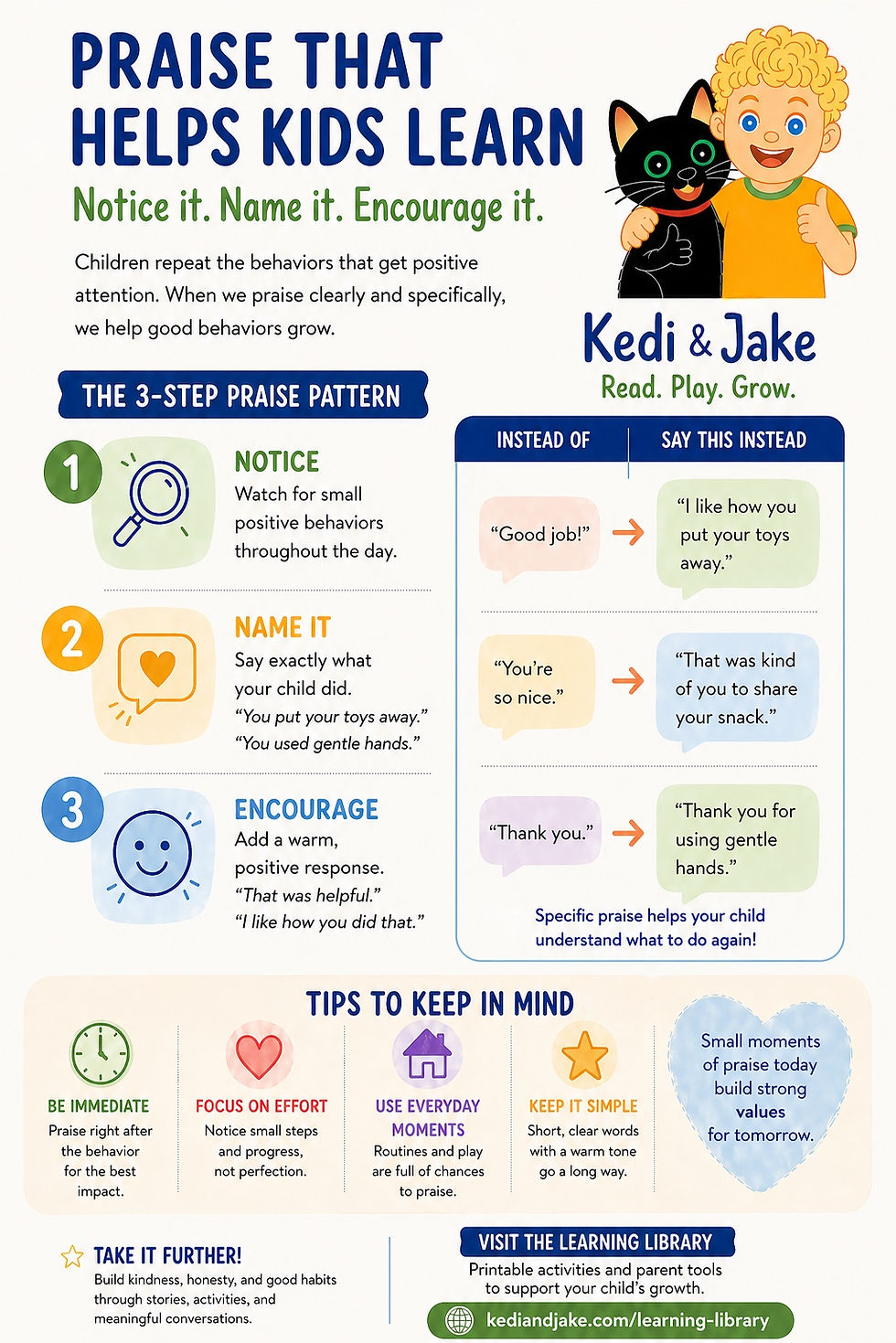
Use this during daily routines or after storytime to reinforce positive behavior.
How to Praise a Child Effectively
Instead of general praise, describe the behavior:
Instead of: “Good job!”
Say: “I like how you put your toys away.”
Instead of: “You’re so nice.”
Say: “That was kind of you to share your snack.”
Instead of: “Thank you.”
Say: “Thank you for using gentle hands with your friend.”
This helps your child connect the words to the action and understand what behavior to repeat.
Keep It Immediate and Simple
Praise works best when it happens right after the behavior.
Notice it quickly
Keep your words short
Use a calm, warm tone
For young children, long explanations are not necessary. A short, clear sentence is enough.
Focus on Effort, Not Perfection
Children are still learning. If you wait for perfect behavior, you will miss many opportunities to encourage progress.
Notice small steps:
Trying to share
Using words instead of grabbing
Telling part of the truth
These moments matter.
Make Praise Part of Everyday Moments
You don’t need special situations to use praise. Daily routines are full of opportunities:
Getting dressed
Cleaning up toys
Playing with others
Talking about what happened
These are the moments where learning happens.
Why Praise Helps Behaviors Stick
Try this pattern:
Notice → Name → Encourage
Notice: Pay attention to a positive behavior
Name: Say exactly what your child did
Encourage: Reinforce it with a warm tone and gentle touch
Example:
“I saw you wait your turn. That was very patient.”
How This Connects to Learning Through Play
Stories, conversations, and activities all create opportunities for children to practice behaviors. Praise is what helps those behaviors stick.
When children hear clear, positive feedback, they begin to understand:
what is expected
what feels good to do
how to repeat it next time
Learning how to praise a child takes practice, but small changes in your words can make a big difference.
Final Thought
Children do not learn values from being told once. They learn through practice, repetition, and feedback.
Printable Tip for Parents
Use this during daily routines or after storytime to reinforce positive behavior.


Comments